
Don't Worry, We've Got Your Back
Two sold-out shows became one, and every fan had to buy again. We used all of the tools available to us to make that easy for them.
Key Takeaways
- •Some people are scared of AI, but AI technology let us pull off an experience for fans that otherwise wouldn't have been possible
- •Whatever experience a fan has with the promoter, they attach to the artist
- •Tools that carry the bulk of the work leave room for the human decisions
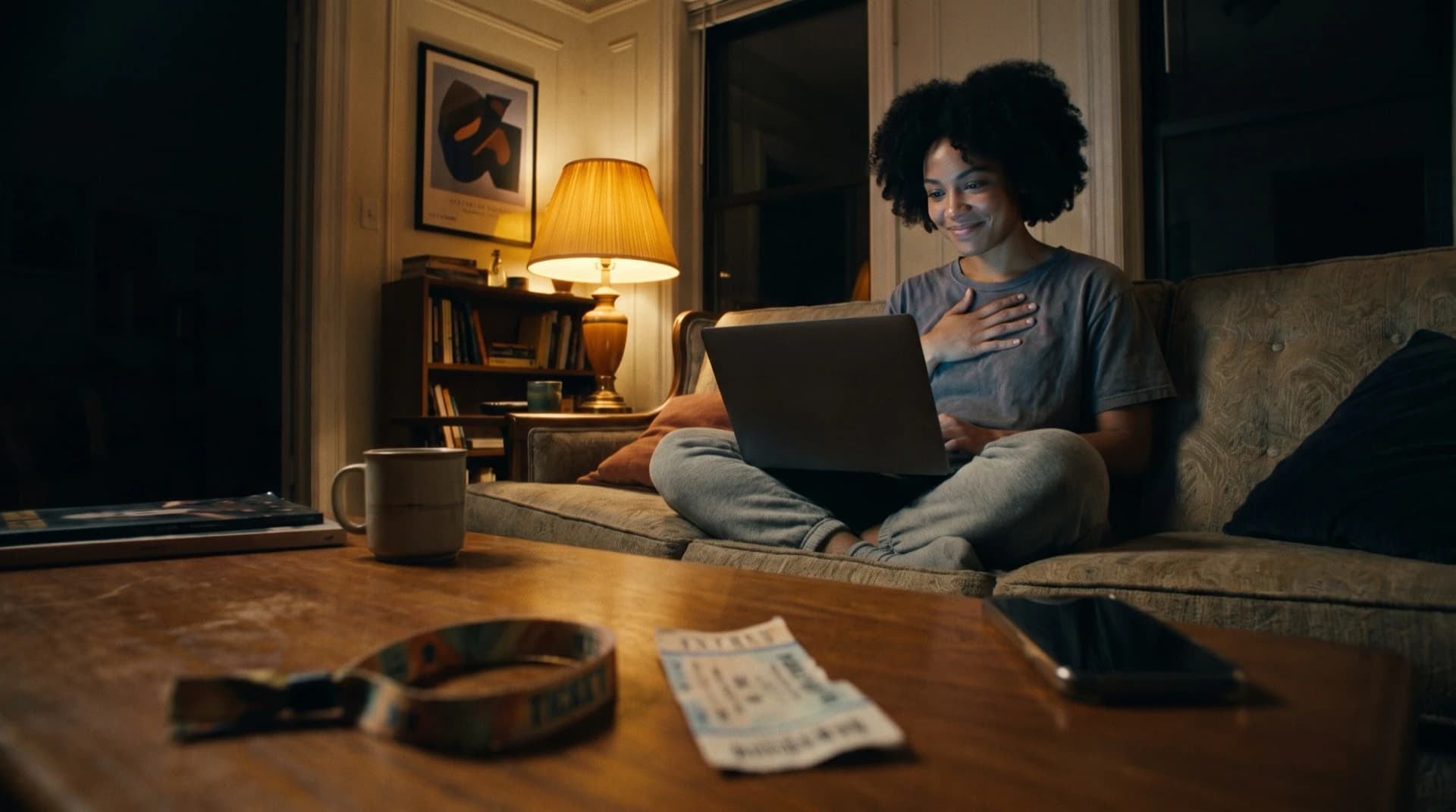
Imagine your favorite band is coming to town, and there's even a meet and greet you can buy, but it's limited. So you set four alarms. You've got your phone, your iPad, and your computer all pointed at the ticketing website. Thirty minutes before tickets go on sale, you get in the queue. You're refreshing, refreshing, refreshing, and holy crap, you make it in.
You secure your VIP package, and you're on top of the world. Nothing could be better. It's all you've wanted all year. You start counting down the days to the show.
Then you get notified that something went wrong and the show can't happen. News is coming soon. You're a bit beside yourself. You've been looking forward to this for months, and now you're not sure if any of it is going to happen.
Suddenly, the artist drops an Instagram post saying that there's going to be a replacement show, but you'll have to buy tickets all over again. Equal parts relief that the show is happening and dread that you're starting from scratch.
That's where the fans were when two sold-out shows on a client's tour had to become one show at a different venue. We knew we owed it to them to deliver a high-touch experience and make some guarantees, something this industry usually shies away from. The buyers from the canceled shows would get in first, with a code.
The Easy Way
The easy way was to give everyone the same code, cross our fingers, hope for the best, and apologize to the fans who got left out. That wasn't good enough.
The problem is the VIP packages. With a broad code, you have to give it a maximum ticket limit equal to the highest quantity on the past orders. That means someone who bought one VIP package can now buy six or eight, or whatever the limit was.
VIP packages are limited for a reason. They come with the best seats available, and one of them includes a meet and greet. An artist can't stand there forever meeting people. There just has to be a limit on it.
Both shows had sold out, and demand for the packages was huge. With a broad code, you can't guarantee that someone who bought two packages for the canceled shows will be able to get two for the new one. We thought we were going to end up turning people away. The lack of staffing and technology resources on our team was going to force us into it, and it would have been a very bad experience for customers who had spent a lot of money.
I had a hunch we could pull off unique codes for everybody, each one limited to exactly the number of packages that person had bought before. If you bought two packages for the canceled shows, you could definitely buy two for the new show. That was really important to us.
The hunch was more of a "We need to figure out a way to do this. Otherwise we're going to have a whole lot of unhappy customers." I wasn't willing to accept that we couldn't figure it out. So we did.
The Ticket Buyer at Home
My background is concert promotion, but also technology and building digital products. You have to think about the individual ticket buyer sitting at home. What experience are they having? It's almost like a walkthrough of your app, where you'd create mock-ups and flow diagrams showing how people navigate it.
In this case, they're going to hear that their show is canceled and a new one has been added. These are people who already lined up and already plunked down money, and some of them paid extra for a VIP package. There's going to be a big feeling of disappointment. All the work that went into being in line right at 10:00 a.m. when tickets first went on sale is gone now. They have to do it again.
The question I kept asking was what they were expecting, and how we could make the entire process easy for them. I've written before about why everyone is a customer. The fan at home is ultimately who pays for everything that we do.
It helps that I understand technology, but also the mechanics of ticketing and live entertainment. On a call, the ticketing company's representatives were suggesting one way of doing it, and I said, "But I know your system can do this, because you did something like this in a different use case." So it was a matter of asking the right questions, and trusting that I could figure out the customer-facing piece on my end.
We did it with AI tools, and it all happened within 36 hours: the codes, the emails, the language for the artist and the venue web pages, and a page on the promoter's website with FAQs we updated as questions came in. Nearly 400 unique codes and more than 1,000 emails went out. We didn't want any gap between the artist announcing the news on their channels and us saying directly to these customers, "Don't worry, we've got your back. Here's what you need to do and when."
We also spun up a new help desk email address for the promoter and told customers to contact us with any questions. And they did.
Room for the Human Part
AI tools drafted the replies to those help desk emails, but the responses were never sent automatically. I read each and every one of them myself before sending, and several went through multiple drafts. It wasn't canned stuff from the FAQ. We tried to be sympathetic to what these customers were experiencing.
The work stayed connected, too. One fan's question could lead to a check of the records, a decision from me, a revised reply, and an update to the FAQ, so the next fan with the same question could find the answer on the page.
One person had made plans to travel in for the original dates. They were rearranging schedules, babysitters, all of it, and they asked nicely whether we could give them a code to buy an upgraded package that had been sold out. We had a little bit of a buffer on the packages, and that was in our decision scope. We agreed. They wrote back:
Other fans wrote back too.
You've saved the day!!! Thank you for being so kind and awesome!!!
Thanks so much for your help and quick response.
Thanks so much! I got the code in my email.
Going to see a show is not life or death. But for some people, seeing their favorite performers come to their city is the highlight of their year. It's a really big deal. These people were now being told it would be a different place on a different date, which upended a lot of their plans.
Using those tools freed us up to make the human decisions. Can I upgrade this person? Can I give them a little inside advice about being at the on-sale early, so they get the seats they want? Without the tools, I feel like we'd have been so busy blocking and tackling, doing the actual work that had to get done, that we couldn't rise above it and bring some humanity to it.
What We Got Wrong
We did have a bit of an oversight from moving too quickly. It didn't occur to us that the list from the ticketing company would split a single order into multiple rows. So some people who bought two packages in one order got two different codes, and a handful of them wrote to the help desk asking whether they could use both together.
We responded to everyone who had written in, letting them know we would come back to them with a solution: either they could use multiple codes, or we'd send them a new code to use for their entire order. Then we asked the ticketing company if multiple codes could be used on the same order. They said, "Actually, you can't."
So we updated the FAQ, invalidated the old single codes, created combined codes based on the total order quantity, and sent those to the people affected. It came to 31 replacement codes, and every package carried over.
We also sent the codes to the original purchasers, not to people who had received a ticket transfer, because the original purchaser was the one getting the refund. In hindsight, I don't know if I would do it the same way again.
Whose Business It Is
None of this was in Capacity's remit on this fractional engagement. We weren't hired to deal with customer service. It was far outside the scope. But when we work with clients, we treat their business as our own.
And whatever experience a fan has with us as the promoter, they attach that feeling to the artist. Capacity is on level one. Zoom out a level and it's our promoter client. Zoom out again and it's the promoter's artist client. If we can help a fan have a really great experience in the face of this ticketing adversity, they feel good about the artist. The hope is that the artist looks at the promoter and says, "Thank you so much. You really took good care of my fans." That makes the agent look good and the manager look good too.
Promoters can be seen as a reverse commodity business: whoever pays the artist the most gets to be the promoter. A situation like this is the exception, a chance to go above and beyond on behalf of a client. Hopefully it creates more business for everybody. The fans are more likely to buy a ticket next time, and the artist is more likely to want this promoter on their next tour.
Going above and beyond for fans and your clients never stops working. And using whatever the state-of-the-art technology is at the moment to deliver on that promise never stops working either.
We said to the fans, "Don't worry, we've got your back." We say the same thing to our clients every day.