
Everyone Is a Customer
In live entertainment, your 'customer' isn't singular. It's every person you interact with.
Key Takeaways
- •A promoter's 'customer' includes artists, their teams, venues, and fans — not just one group
- •Design-thinking principles like clear expectations and removing friction apply to every stakeholder
- •The quality of the experience persists long after the operational details fade
- •Great service is built in small, consistent moments
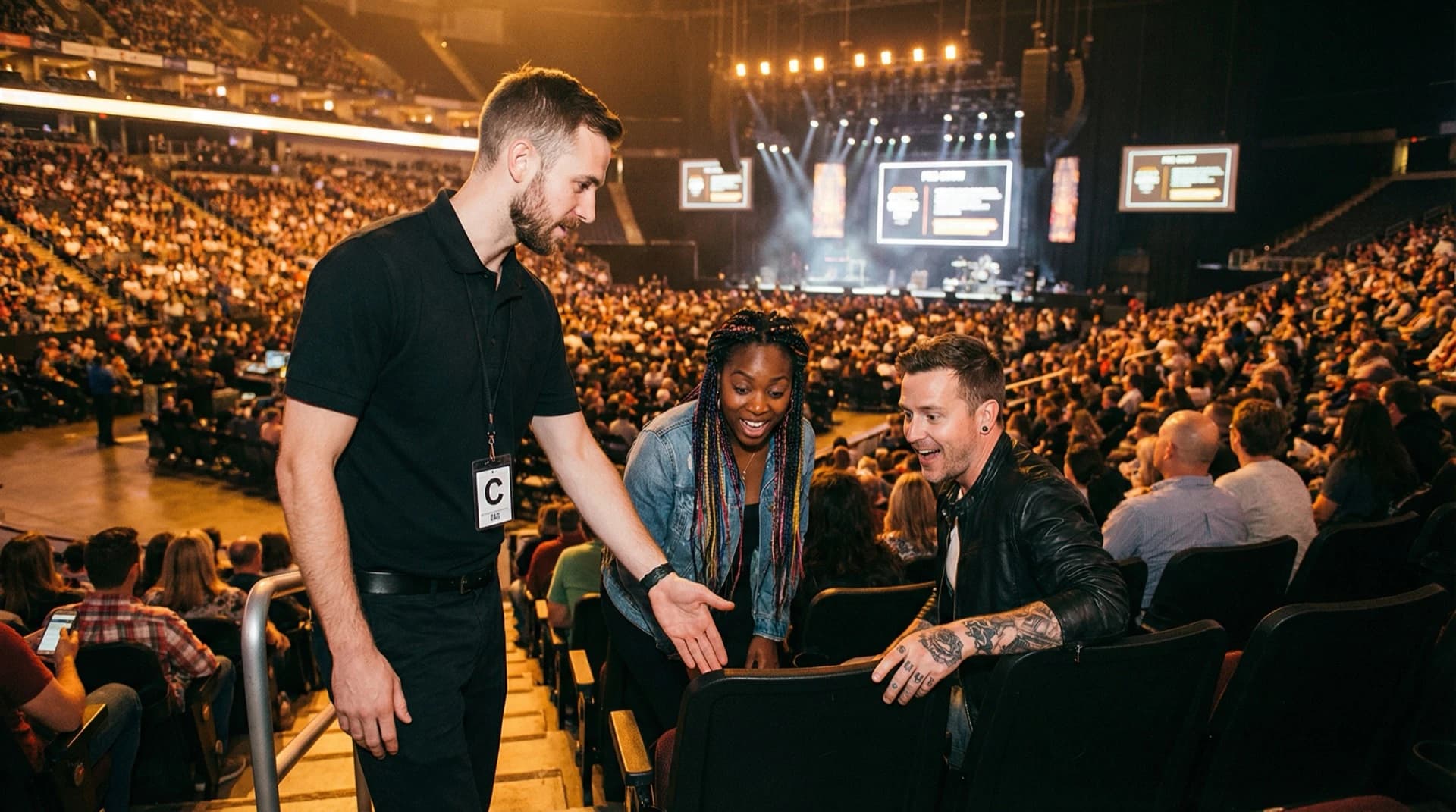
One of the most enjoyable things I get to do as a promoter has nothing to do with deal-making or show logistics. It happens close to showtime, when last-minute holds get released and good seats open up.
We find the fans sitting in the upper deck, the ones who bought the cheapest tickets because they just wanted to be in the building, and we move them down. No announcement, no fanfare. Just a tap on the shoulder and a better seat. We call them magic upgrades.
It costs us nothing. But anyone willing to watch a show from the back of the arena is a real fan, and that small, unexpected gesture turns a good night into one they'll talk about for years. I've seen people cry. I've seen people grab strangers and hug them. Over a seat change.
That's a tiny example. But it says something about how we think about the work.
Your Customer Isn't Singular
In live entertainment, it's easy to define your customer narrowly. The artist is the client. The fan is the consumer. The venue is the partner. Each role gets a label and a lane.
But the reality is less tidy. As a promoter, everyone I work with is a customer of my service.
The artist trusts us with their name, their reputation, and their evening. Our job is to make the experience seamless enough that they can focus on performing.
The team around the artist, the agents, managers, and production directors, each has their own pressures and their own definition of a good experience. A clean advance, timely information, no surprises.
The venue is a customer of our professionalism. They're trusting us with their building, their staff, and their community relationships. Every interaction either builds that trust or erodes it.
The fans are the most visible customer, but often the last ones whose experience gets intentionally designed. They navigate parking, ticketing, security, concessions, sightlines, sound. And they remember all of it.
Every one of these relationships operates on the same basic expectation: that working with us will be a good experience.
Thinking Like a Designer
You don't need to be a UX designer to think like one. The principles that make software intuitive are the same ones that make working relationships work.
Set clear expectations. Everyone should know what's happening and when. The advance process exists to eliminate guesswork. A good settlement timeline is communicated before the show, not negotiated after it.
Deliver on promises. If you say the settlement wire will hit tomorrow, it happens tomorrow. Trust is built in the follow-through, not the pitch.
Remove friction. Think about every interaction from the other person's perspective. What's confusing? What's harder than it needs to be? Where are people waiting for information they shouldn't have to chase?
Provide fair value. This goes beyond pricing. It's the sense that the exchange is equitable, that the deal respects what each person is bringing to the table.
Make the next step obvious. At every stage, the path forward should be clear. No one should have to wonder what happens next or who they need to call.
These aren't revolutionary ideas. They're foundational. And yet they're easy to neglect when you're deep in the logistics of putting on a show.
Every Touchpoint Is a Moment
A designer maps user flows. Every screen, every click, every decision point gets considered. A good promoter does something similar, whether they call it that or not.
Think about the artist's journey through a single engagement: first conversation, offer, confirmation, advance, travel, load-in, soundcheck, show, settlement, follow-up. Each step is a small moment where you either deliver or disappoint. The same is true for the venue's experience with you, the agent's experience, the fan's experience walking through the doors.
People don't remember every email or every phone call. They remember how the experience felt. They remember whether it was easy or difficult, whether they felt respected or overlooked, whether they'd want to do it again.
That feeling is the product.
Small Moments, Consistently
The big shows and the big deals get the attention. But the experience is built in the small moments. The clear email. The on-time settlement. The production manager who has everything they need before they ask. The fan who gets moved to a better seat just because they showed up.
None of this is a strategy, really. It's just how we try to work. And honestly, some days we're better at it than others. But the intention is there, and I think people can tell.