
The Business Underneath the Shows: Applying EOS to Concert Promotion
Concert promotion companies are built around shows. But the business underneath—the systems, priorities, and structure that make it all work—usually runs without a framework. EOS offers one worth exploring.
Key Takeaways
- •Most concert promotion companies are built around shows, not systems—EOS provides a framework for building the business underneath the craft
- •Corporate-level priorities (Rocks) and a weekly scorecard shift focus from firefighting individual shows to building a durable company
- •The Visionary/Integrator distinction maps naturally to promotion—deal-makers need operators, and most resist hiring them
- •Documenting core processes from relationship building through settlement creates consistency and institutional knowledge
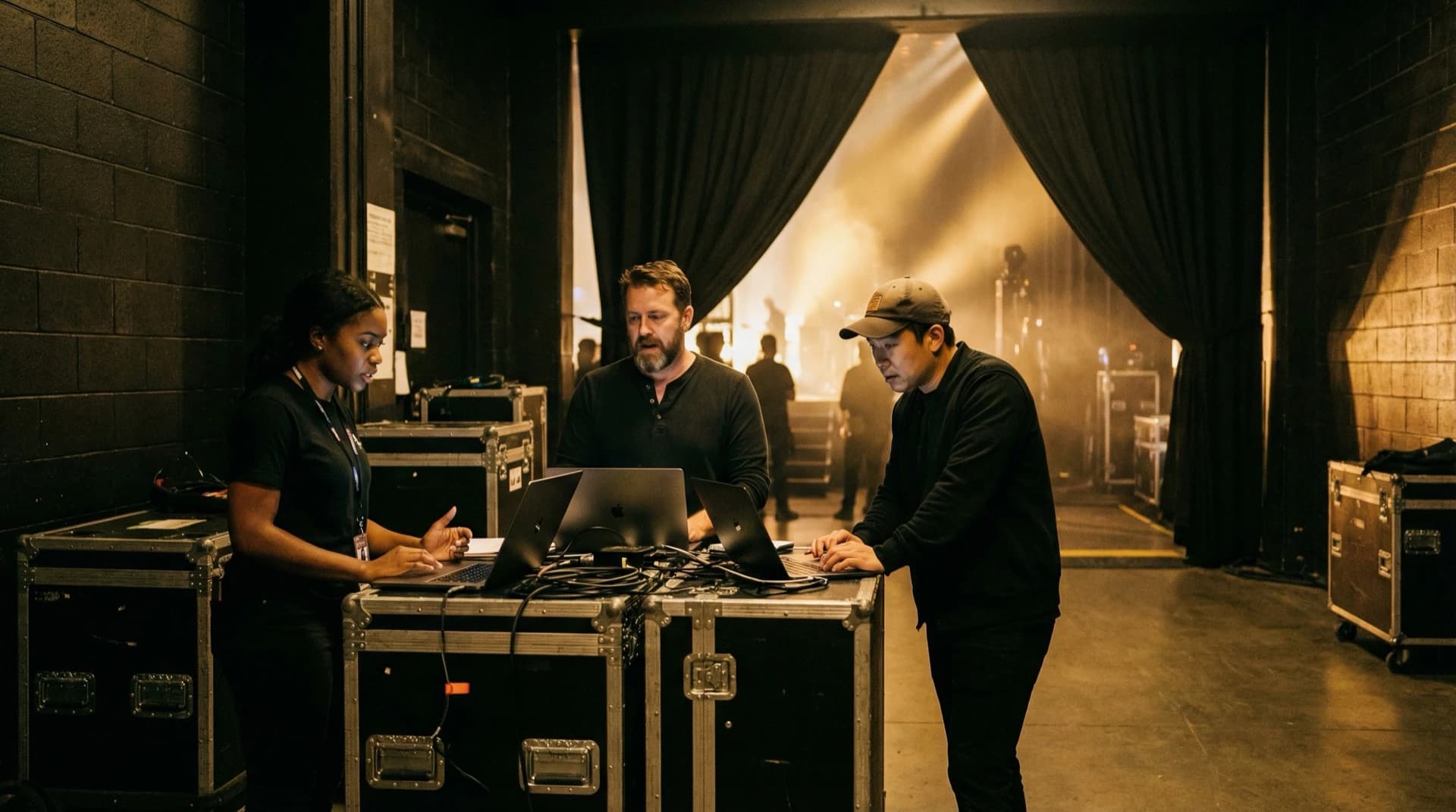
Concert promotion is a craft. The best promoters have taste, relationships, and an instinct for what works in their markets that no amount of data can replace. These are people who build careers on judgment calls—which artist to bet on, which venue fits the moment, when to push a ticket price and when to hold back.
But promotion companies are still businesses. They have teams, overhead, cash flow, and strategic decisions that compound over years. And most of them—from independents doing fifty shows a year to regionals doing five hundred—run without a formal operating system. The craft gets all the attention. The business underneath it just kind of happens.
I've been thinking about what it would look like to change that. Specifically, I've been working through Gino Wickman's Traction and its Entrepreneurial Operating System—EOS—and asking a simple question: what would this framework look like applied to a concert promotion company?
EOS isn't new. More than 250,000 businesses run on some version of it. But I haven't seen it applied to concert promotion in any serious way, and the exercise of mapping its six components—Vision, People, Data, Issues, Process, and Traction—onto a promotion business has been more revealing than I expected. Not because the framework is magic, but because it forces you to articulate things that most promotion companies leave implicit.
What follows is that exercise. I'm not an EOS implementer, and this isn't a prescription. It's a thought experiment—one that I think is worth working through, even if you never adopt the framework formally.
Strategic Clarity
EOS starts with two components that work together: Vision and Traction. Vision is the strategic clarity—who you are, what you do, where you're going. Traction is the discipline of executing against that vision in 90-day increments.
Defining Your Core Focus
Promotion companies drift. It's natural. You start booking shows, and before long you're managing a venue, producing a festival, consulting on sponsorship deals, maybe dabbling in artist management. Each opportunity makes sense in isolation, but collectively they dilute focus and stretch resources.
EOS forces a conversation about core focus—what Wickman calls the "sweet spot." What do you actually do better than anyone else? For some companies, it's being the best independent promoter in their city, with deep local knowledge and relationships that national players can't replicate. For others, it's a genre specialty or a specific venue tier. Both are valid. The framework just forces you to choose and articulate it.
The same applies to the longer view. EOS asks for a ten-year target—not a detailed plan, but a clear picture of where you're heading. The range among promoters is wide. Some want to build regional touring empires. Others want to deepen in a single market. The specifics matter less than having an answer, because the answer shapes every decision downstream.
Corporate-Level Rocks
This is where the framework gets interesting for promoters—and where it diverges most from how most promotion companies think about priorities.
EOS uses "Rocks"—90-day priorities that represent the most important things the company needs to accomplish this quarter. Not the most urgent. Not the loudest. The most important.
A Rock is a corporate-level priority—something that builds the business over 90 days. It's distinct from the show-level metrics (ticket sales, settlement numbers, production logistics) that consume day-to-day attention.
For a promotion company, Rocks might look like: booking a target number of shows in a specific venue tier, achieving a contribution margin target across the quarter's slate, establishing two new media partnerships, or improving productivity by increasing show count without adding headcount. These aren't show metrics. They're business-building priorities that happen above the level of any individual event.
The quarterly cadence maps well to how promoters already work. You're always operating three to six months ahead on the booking side. A 90-day planning horizon just gives that forward-looking work explicit targets and accountability.
The Right Team
EOS dedicates an entire component to People—specifically, to making sure you have the right people in the right seats. In a promotion company, this starts with clarity about what the seats actually are.
The Accountability Chart
The framework uses an accountability chart rather than a traditional org chart. The distinction matters, especially in small companies where people wear multiple hats. An accountability chart identifies the core functions of the business and who owns each one—regardless of title or reporting structure.
For a concert promotion company, the core functions tend to be:
- Booking / talent buying — sourcing, evaluating, and closing deals
- Marketing — demand generation, campaigns, creative, driving awareness from announcement through show day
- Ticketing — event builds, pricing and scaling, inventory management, sales reporting, presales, settlement reconciliation
- Production and operations — advancing shows, managing logistics, executing events
- Finance — budgeting, cash management, settlement, accounting
- Sponsorship and partnerships — building revenue beyond ticket sales
A ten-person promotion company probably has dedicated people in most of these seats already: a couple of talent buyers, a marketer or two, a ticketing person, a production manager, an assistant, a couple of accountants. The multiple-hats problem is more acute at three to five people, where the founder is booking shows, the office manager is handling ticketing and marketing, and finance is whoever opens the spreadsheet last. The accountability chart is most useful at that stage—when making the implicit explicit actually changes how work gets done.
The Visionary/Integrator Split
One of EOS's most useful ideas is the distinction between two leadership roles: the Visionary and the Integrator.
The Visionary is the creative force—the person with the relationships, the ideas, the instinct for deals. In concert promotion, this is often the founder. They're the ones who can call an agent and get a deal done, who see an opportunity in a market before anyone else, who have the taste that defines the company's identity.
The Integrator is the operational counterpart—the person who turns vision into systems, manages the team, runs the meetings, and makes sure things actually get done consistently. They're the ones who build the infrastructure the Visionary needs to keep doing what they do best.
Most promotion companies I've observed have a strong Visionary and no Integrator. The founder does everything, or the operational work falls to whoever has bandwidth. The company grows to the point where this stops working—where the founder's time becomes the bottleneck—and then it stalls. Hiring an Integrator, or developing someone into that role, is often the unlock.
Right People, Right Seats
The other people-related concept worth noting is GWC: does the person in each seat Get it, Want it, and have the Capacity to do it? This is a simple framework for an uncomfortable conversation. The person who was great when you did twenty shows a year may not have the capacity—literally or figuratively—for two hundred. Growth exposes these gaps, and having a structured way to evaluate them beats avoiding the conversation.
Running on Data
Most promotion companies are data-rich and insight-poor. They have ticket sales numbers, settlement reports, expense tracking, pipeline spreadsheets. What they often lack is a disciplined, weekly practice of looking at the numbers that actually indicate business health—not just show health.
A Weekly Scorecard
EOS proposes a scorecard: a small set of metrics reviewed weekly that tell you whether the business is on track. For a concert promotion company, that scorecard might include:
- Pipeline health: confirmed shows vs. quarterly target, offers outstanding, win rate on offers
- Ticket velocity: weekly sales pace across active on-sales, percentage to breakeven by show
- Financial position: projected P&L across upcoming shows, cash position, receivables
- Growth indicators: new venue or artist relationships initiated, sponsorship pipeline value
- Team capacity: show load per person, shows in advance process simultaneously
The point isn't to track everything. It's to identify five to fifteen numbers that, if they're all trending in the right direction, tell you the business is healthy—and if any of them go off track, you know early enough to do something about it.
The Level 10 Meeting
The scorecard lives inside what EOS calls the Level 10 Meeting—a weekly, 90-minute structured meeting with a fixed agenda. Scorecard review. Rock progress. Issues that need solving.
Most promotion teams don't have a meeting like this. They have ad hoc check-ins, or they meet when a show is in trouble. The discipline of showing up every week to look at the numbers—not just when something is on fire—is the behavioral change that makes the scorecard useful.
Solving Issues Permanently
EOS has a process called IDS—Identify, Discuss, Solve—for working through the issues list. The emphasis is on solving permanently rather than managing temporarily.
In promotion, certain issues recur across companies: advance process gaps that cause the same production miscommunications, settlement disputes rooted in unclear deal terms, the habit of saying yes to too many shows and stretching the team thin. These aren't mysteries. They're known patterns. The discipline is building solutions that actually stick, rather than firefighting the same problems quarter after quarter.
Documenting What Works
The Process component of EOS is the one that gets the most resistance in creative businesses. Documenting processes sounds like bureaucracy—the opposite of the instinct-driven, relationship-built world of concert promotion.
But Wickman's framing is practical: document the 20% of steps that produce 80% of the results. Not a manual for every scenario. Just enough to ensure consistency, preserve institutional knowledge, and make it possible for someone new to step into a role without starting from zero.
For a concert promotion company, the core processes map naturally:
- Relationship building and pipeline development — how you cultivate artist and venue relationships that generate deal flow, and how you structure venue relationships to ensure base profitability
- Deal evaluation and booking — from initial offer through negotiation to confirmation
- Show advance — logistics, production, riders, venue coordination, the operational work that turns a confirmed show into an executable event
- Marketing and ticket sales — announcement, on-sale, ongoing campaigns, show-day promotion
- Show execution — load-in through load-out, the event itself
- Settlement and financial close — reconciliation, artist settlement, post-mortem analysis
Most promoters could describe each of these processes in detail. Few have written them down. The act of documenting—even briefly—reveals inconsistencies, identifies dependencies, and creates something that persists when people leave or roles change. The goal isn't bureaucracy. It's institutional memory.
The value of documenting processes increases with scale. A promoter doing fifty shows a year can hold it all in their head. At two hundred shows, the team that has documented its core processes operates with a significant advantage over the one running on institutional knowledge that lives in individual people.
Tools help here. An application like Mogul—which tracks offers, ticket counts, expenses, and settlements in one place—embeds parts of this process documentation into the workflow itself. The system becomes the process, rather than a manual that sits in a drawer.
The Exercise Is the Point
I don't know if EOS is the right operating system for concert promotion. It might be too structured for some companies, not specific enough for others. There are alternatives—Scaling Up, the Rockefeller Habits, custom frameworks—and plenty of successful promoters who've built great companies without any formal system at all.
But the exercise of working through these components—articulating your strategic focus, defining accountability, building a scorecard, solving issues systematically, documenting what works—is valuable regardless of the framework. It surfaces questions that most promotion companies have never explicitly answered. And in my experience, the companies that have answers to these questions, even imperfect ones, operate with a clarity that the ones running on instinct alone do not.
An operating system doesn't replace the craft. The best promoters will always have taste, relationships, and intuition that no framework can teach. What a system does is give that craft structure—so the business underneath the shows is as intentional as the shows themselves.
That seems worth the effort.