
Venue Feasibility: If You Build It, Will They Come?
A framework for understanding whether your venue can become a destination for live entertainment—and what it takes to get there.
Key Takeaways
- •Start with market demand, not the building—understanding the competitive landscape reveals where opportunity exists
- •Infrastructure requirements for modern touring are specific, but knowable and addressable
- •The best feasibility work transforms an idea into a plan with clear milestones for success
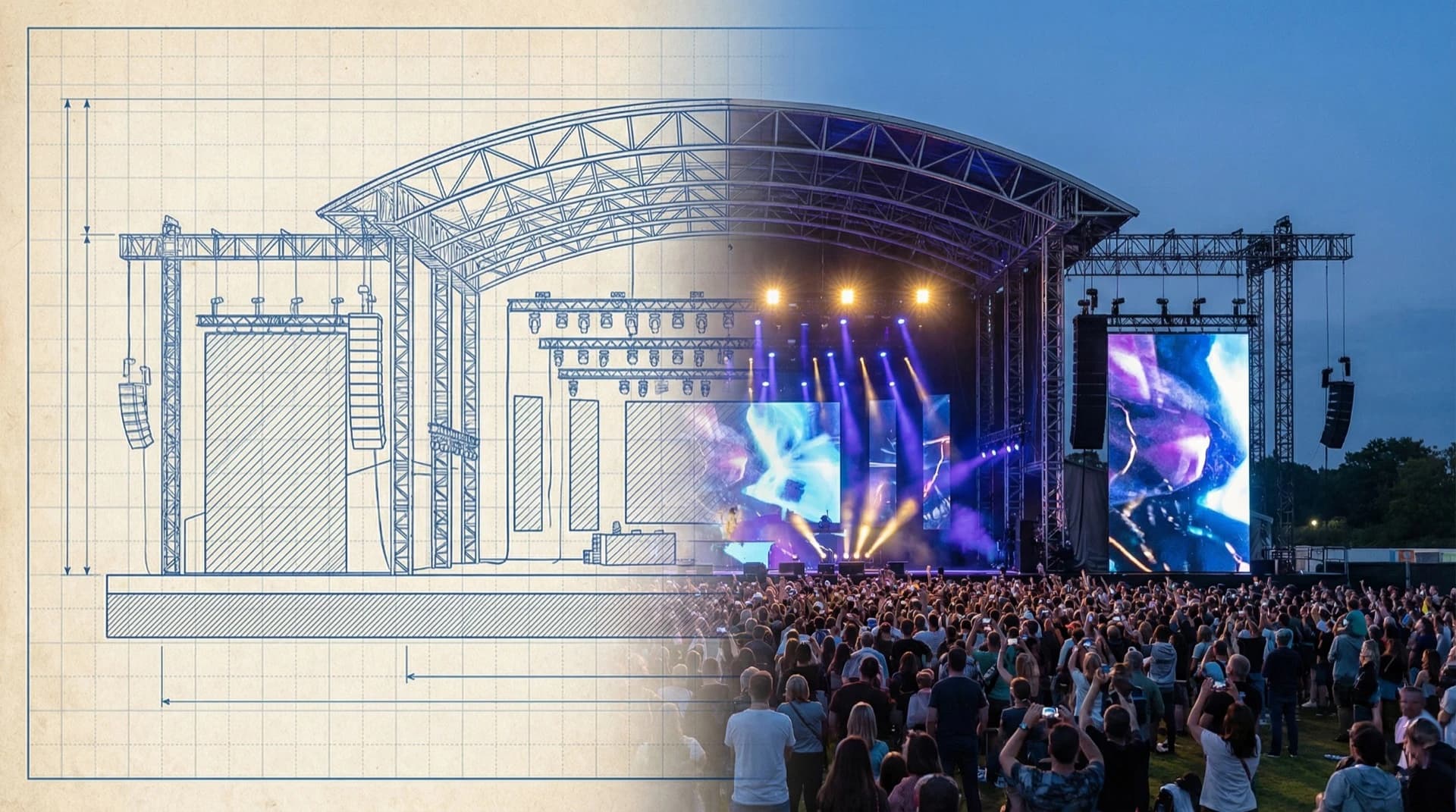
There's something irreplaceable about live entertainment. The shared experience, the energy of a crowd, the memories that last decades—these moments happen in physical spaces. And when a venue gets it right, it becomes woven into the cultural fabric of its community.
That potential is what draws venue operators to consider concerts and live events. The question is whether your specific venue, in your specific market, can realize that potential. If you build it, will they come?
The answer requires honest analysis—not to discourage the attempt, but to ensure it succeeds.
Start With the Market, Not the Venue
The instinct is to begin with what you have—the facility, its capacity, its location. But feasibility analysis should start elsewhere: with demand.
What does the live entertainment ecosystem in your market actually look like? How many concerts happen annually in your capacity range? What genres perform well? Where do promoters currently route tours, and why?
These questions matter because your venue doesn't exist in isolation. It will compete for touring acts and ticket-buying fans alongside established players. Understanding that landscape is the first step toward finding your place in it.
Mapping the Competitive Landscape
Every market has established players with existing promoter relationships, proven track records, and operational infrastructure. A new entrant needs to offer something genuinely differentiated—not just another room, but a better option for specific needs.
Consider the positioning options:
- Capacity gap: Is there an underserved size tier? Most markets already have clubs and arenas covered, but often lack strong mid-size options.
- Genre specialization: Some venues succeed by becoming the obvious choice for specific genres that larger rooms ignore.
- Calendar availability: Existing venues may be constrained by other uses, namely sports. Flexible availability can attract tours that can't wait for ideal dates.
- Economic terms: Better deals for artists and promoters matter, though this alone rarely sustains competitive advantage.
Honest competitive analysis sometimes reveals that a market is well-served. More often, it reveals specific opportunities—gaps that a well-positioned venue can fill.
Infrastructure Reality Checks
Having a space that holds people is necessary but not sufficient. Modern touring requires specific infrastructure, and understanding these requirements early prevents costly surprises later.
Power
Concert production draws significant electrical load. Many venues built for other purposes—athletic facilities, convention centers, historic theaters—have electrical systems designed for different demands.
Upgrading power infrastructure requires investment, but it's foundational. The shows that drive ticket sales and build reputation need adequate power to deliver their full production.
Load-In and Rigging
Tours arrive in trucks—often many trucks. They need direct access to the stage area, ideally with grade-level loading docks wide enough for semi-trailers. Efficient load-in and load-out keeps production costs manageable and makes your venue easier to work with.
Above the stage, rigging points determine what production elements are possible. The shows audiences now expect—large video walls, dynamic lighting, aerial elements—require substantial structural support. Understanding your rigging capacity defines what tier of production you can host.
Artist and Production Support
Behind every show is a temporary operation: dressing rooms, catering, production offices, secure storage, crew facilities. Professional-grade backstage infrastructure makes artists and their teams want to return.
Artists have riders—contractual requirements for their accommodations. Meeting these requirements consistently builds your venue's reputation with the touring community. Word travels fast among road crews and tour managers.
Fan Experience
The front-of-house experience determines whether audiences return and recommend the venue to friends. Adequate restrooms, reasonable concession service, good sightlines, quality acoustics—these details compound over time into reputation.
Acoustics deserve particular attention. Rooms designed for speech or sports often have characteristics that work against amplified music. The good news: acoustic treatments can transform a challenging room. The key is knowing what you're working with.
Financial Modeling That Tells the Truth
Strong financial analysis serves the project, not just the pitch deck. The goal is understanding what success requires and whether it's achievable.
Revenue Streams
Live entertainment generates revenue from multiple sources:
- Venue rental: Fixed fees charged to promoters
- Ticket surcharges: Facility fees added to ticket prices
- Food and beverage: Often the largest revenue opportunity
- Merchandise commissions: Percentage of artist merchandise sales
- Parking: Where applicable
- Sponsorship: Naming rights, signage, hospitality
Each stream has its own dynamics and optimization strategies. The venues that thrive understand all of them.
Operating Economics
Event operations require specialized staff: front-of-house, security, technical crew, box office, hospitality. These costs are real but manageable with efficient operations.
Marketing, insurance, licensing, and administrative overhead round out the picture. Understanding true operating costs enables realistic projections—and realistic projections enable good decisions.
The ROI Question
Return on investment depends on utilization. A venue hosting four events per year faces different economics than one hosting forty.
Utilization projections require understanding your likely capture rate—what percentage of potential events will you win? New venues build toward full capacity over time as they establish reputation and relationships. Modeling that ramp-up realistically sets appropriate expectations.
Building scenarios—optimistic, realistic, and conservative—illuminates the range of outcomes and the factors that drive them.
Questions to Answer Before Proceeding
Before committing capital, ensure you have defensible answers to these questions:
-
What's our competitive differentiation? Why would promoters choose you? The clearer the answer, the stronger the position.
-
What infrastructure investments are required? Professional assessments beat rough estimates. Know what you're signing up for.
-
What utilization rate makes the investment viable? And what's the realistic path to achieving it?
-
Who are our partners? Relationships with promoters, booking agents, and production vendors matter. Existing relationships accelerate success.
-
What's our operational capability? Live entertainment operations differ from other event types. Know where you'll need to build capability.
-
What does success look like at year one, year three, year five? Clear milestones enable course correction and demonstrate progress.
The Value of External Perspective
Feasibility analysis benefits from objectivity and industry expertise. Internal teams bring valuable knowledge of the venue and community, but outside advisors bring market intelligence, promoter relationships, and pattern recognition from similar projects.
The right advisor has seen what works and what doesn't across multiple markets. They can benchmark your opportunity against comparable venues, identify risks you might not see, and validate assumptions with real-world data.
Perhaps most importantly, they can help you see your venue through the eyes of the touring industry—the promoters and artists who will ultimately decide whether to book it.
Making the Decision
Feasibility isn't binary. The answer is rarely a clean yes or no. It's usually conditional: the venue could succeed if certain investments are made, certain partnerships secured, certain operational capabilities developed.
The question then becomes whether those conditions are achievable, at what cost, and with what timeline.
Some venues discover that the path exists but requires more than they're prepared to commit right now. That's useful knowledge—it enables better timing or a phased approach.
Others find genuine opportunity: a market need that aligns with their capabilities, a clear value proposition, and a credible path to capturing the business. These projects succeed not through hope but through preparation.
The best feasibility work doesn't just answer "can we do this?" It answers "how do we do this well?" It transforms an idea into a plan, and a plan into a venue where people make memories that last a lifetime.